UCLA Insect Catalog
Posted on 15 July, 2025 / 2 min read
Part 1: Spiders
It was a bright autumn day as I walked down the Hill, the moniker given to the cluster of dormitories northwest of UCLA's main campus.
I ventured into De Neve and decided to do some ResLife work in the ORL. That's when I overheard a friend recount a horrific saga from the night before. She was leaving her apartment to go on a drive when she nearly ran head-first into a spiderweb inconveniently hanging right across the threshold of her front door. The spider was no small arachnid, and its frightfulness could be deduced from the narrator's tone. Fortunately, she was equipped with bug spray and quickly dispatched the octopod.
Her story was not a fluke. Venturing around UCLA's campus, one is bound to spot at least half a dozen such large hairy spiders spinning webs in previously unoccupied areas such as between stairrails, doorframes, streetlights, and palm trees.
Fortunately, it appears the spider surge has diminished, but, for funsies, I've documented a few of the spiders (and other bugs) I encountered this Fall.
Hanging Out Near De Neve
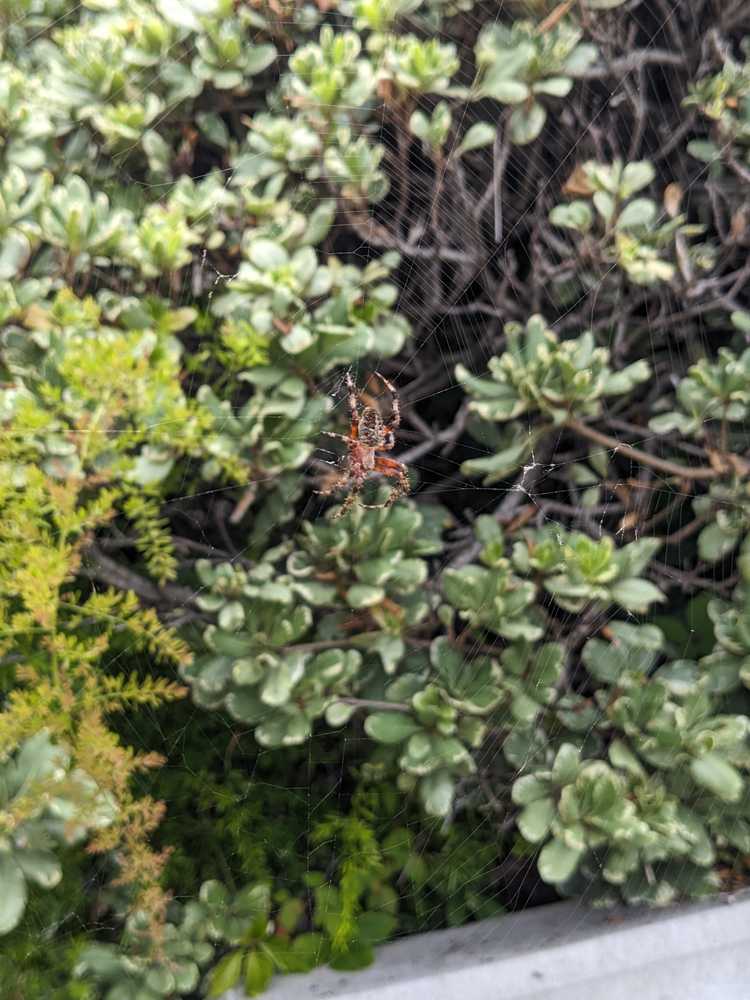
SpiderZilla Climbing De Neve
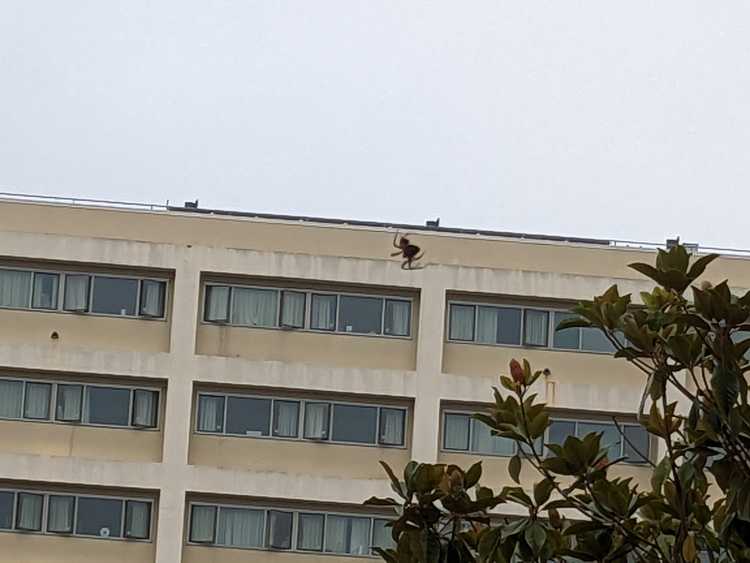
A Street Spider At Night
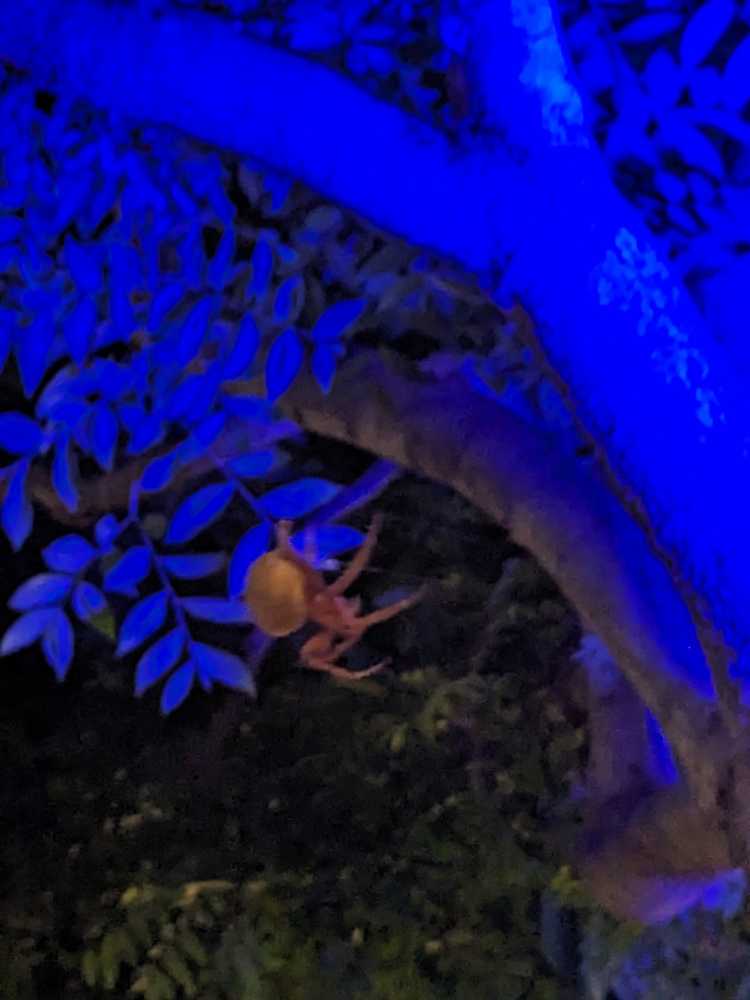
Their Prey?
Once Again De Neve
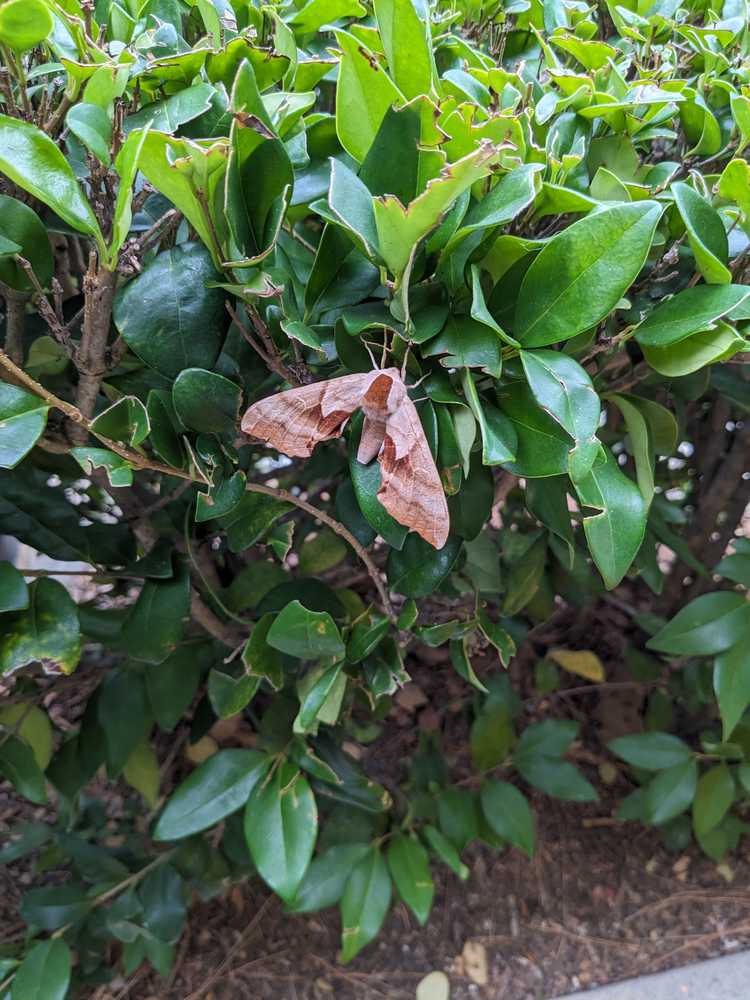
Forgot Where I Saw This
Inching Around BPlate
De Neve seems to be a popular spot.
Part 2: Beetles
Fast forward to June 2025. Usually, we say that June bugs come out in June, which is true if you're walking around a grassy field at night with a flashlight.
In fact, here's some June bugs from my front yard where I did just that.

But, it turns out that many other beetles pick June for their mating season as well. And not just at night.
The first bugs I stumbled upon were seed bugs. True, they're not technically beetles (they're so-called true bugs), but to a layman like me, that's like saying eggplants are fruits. But, I'll get to that later.
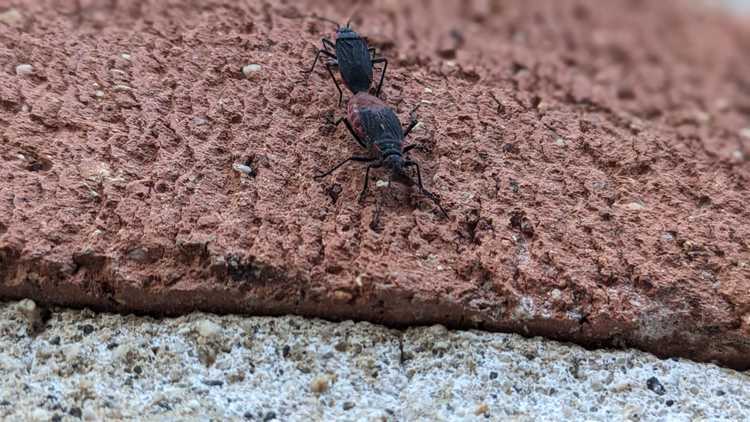
Are these charcoal seed bugs?
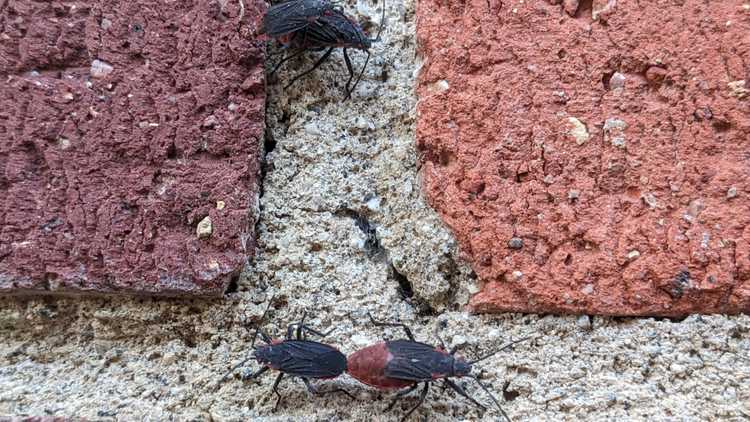
Or are they boxelder bugs? Anyway, they are Hemiptera that can be found on the brick garden walls on the way to Powell from BruinWalk.
What about these?
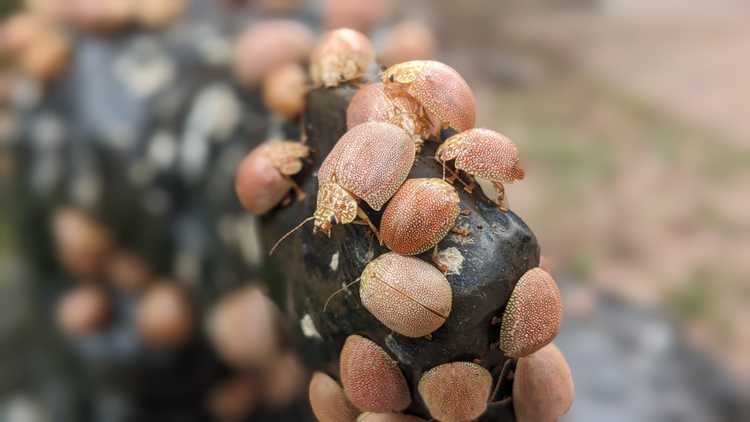
These are actual beetles - specifically, a species of leaf beetle. Whether they are Eucalyptus leaf beetles or dotted paropsine leaf beetles, they are an invasive Australian species.
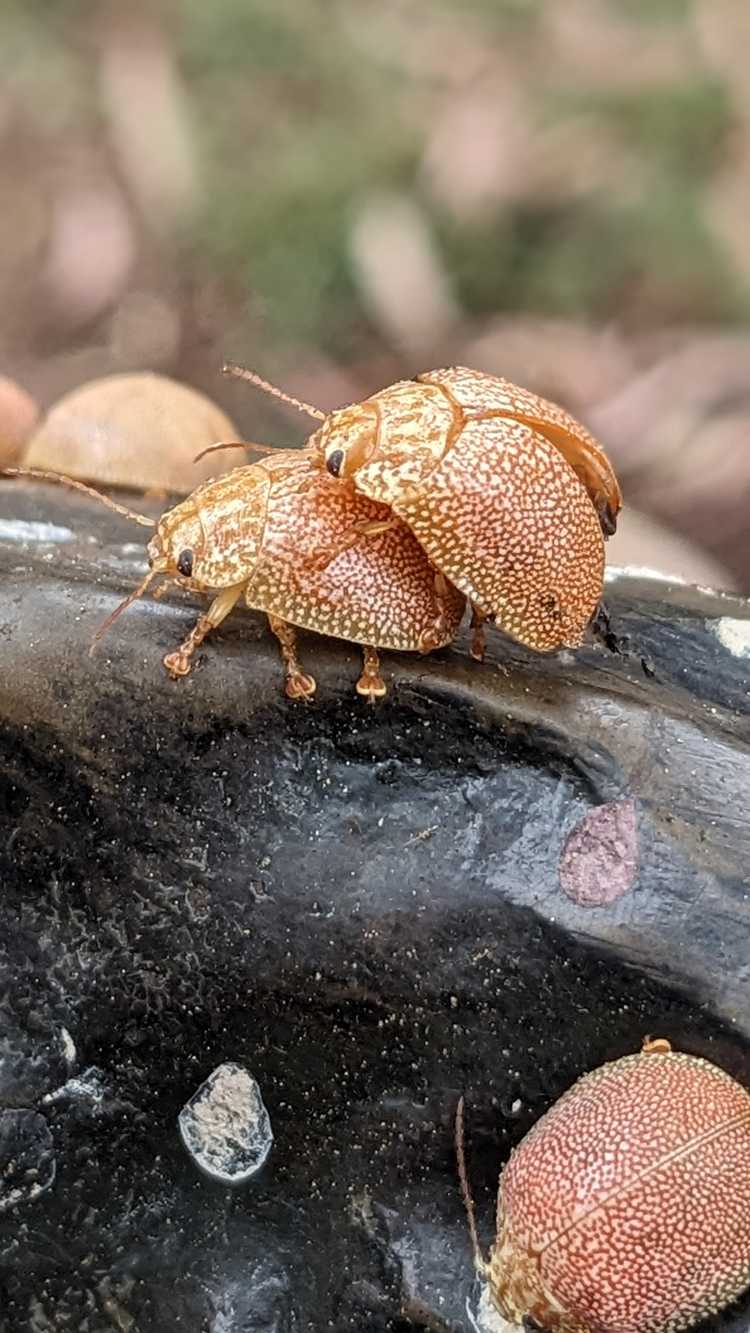
Notice how unlike the seed bugs, these beetles are mating via dorsal mounting instead of end-to-end mating. But wait! While the seed bugs I captured were turned away from each other, apparently they also begin with dorsal mounting before switching to hours-long end-to-end copulation. What's up with that?
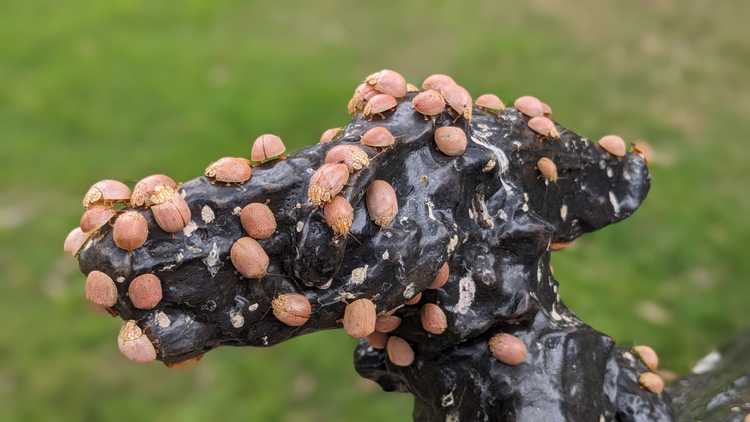
Come stop by the sculpture garden in June to enjoy the Eucalyptus leaf beetle infestation! They tend to drop out of the trees and are very cute. Much cuter than drop bears, I've heard.